Showing posts with label religion. Show all posts

Friday, January 25, 2013

Christianity and women


I am reading now the brilliant The Triumph of Christianity: How the Jesus Movement Became the World's Largest Religion written by the sociologist Rodney Stark, one of the most active proponents of the Rational Choice Theory in the sociology of religion.
Although I am not a fan of this approach (to be discussed later) I came to the very intriguing chapter 7, where Stark affirms that women were, for a variety of reasons, crucial to the survival and later expansion of Christianity in the Roman Empire.
Here I present in a concise form the 6 major claims:  

1. Women in the early Christian communities were considerably better off than their pagan and even Jewish counterparts. They enjoyed more security and equality in marriage.
“Hellenic women lived in semi-seclusion, the upper classes more than others, but all Hellenic women had a very circumscribed existence; in privileged families the women were denied access to the front rooms of the house. Roman women were not secluded, but in many other ways they were no less subordinated to male control. Neither Hellenic nor Roman women had any significant say in who they married, or when. (…) Roman wives had very limited property rights; Hellenic women had none. Neither could be a party to contracts. (…)
Everywhere Jewish girls were married very young to whomever their father chose, they were easily and quite often divorced by their husbands, but wives could not seek a divorce except under very unusual circumstances, such as the husband being impotent or a leper.”
2. Because of the widespread among Pagans practice of infanticide, to which female babies were more exposed than male babies, substantially more Christian (and Jewish) female infants lived.
In Pagan families female babies were routinely killed because boys were favored. In contrast, Christians condemned the infanticide by considering it murder.
3. Christian women were married at a later age when they were more mature physically and emotionally.  
4. Pagan and Jewish women were divorced frequently without having any say in the process. In contrast, Christianity has explicitly condemned the remarriage and adultery, making it a sin for a male to divorce his wife: “And I say to you: whoever divorces his wife, except for unchastity, and marries another, commits adultery” (Matt. 19:9).
5. Devout Christian married couples may have had sex more often than did the average pagan couple, because brides were more mature when they married and because husbands were less likely to take up with other women.
6. There was a shortage of women in the Roman Empire in the first three centuries of Christianity mostly because of infanticide. It is being estimated that “there were 131 males per 100 females in Rome, rising to 140 males per 100 females in the rest of Italy, Asia Minor, and North Africa while Christians had their rates of females not affected by infanticide… If women made up 43 percent of the pagan population of Rome (assuming a ratio of 131 males to 100 females), and if each bore four children, that would be 172 infants per 100 pagans, making no allowance for exposure or infant mortality. But if women made up, say, 55 percent of the Christian population (which may well be low), that would be 220 infants per 100 Christians—a difference of 48 infants.”

All these demographic and gender factors combined, argues Stark, have helped Christianity not only to survive in the short term (immediately after the death of Jesus the community of his followers numbered not more than 30-40 people), but in longer term to  become the religious group with most adherents and to become the official religion of the Roman Empire.

Monday, August 6, 2012

Christianity as a personality cult

Christianity is, at root, a personality cult. Its central message is the story of a person, Jesus, whom Christians believe is also the Christ (from a Greek word meaning ‘Anointed One’): an aspect of the God who was, is and ever shall be, yet who is at the same time a human being, set in historic time. Christians believe that they can still meet this human being in a fashion comparable to the experience of the disciples who walked with him in Galilee and saw him die on the Cross. They are convinced that this meeting transforms lives, as has been evident in the experience of other Christians across the centuries
from A history of Christianity: The first three thousand years (Penguin Books Limited: 2009), by Diarmaid MacCulloch

Friday, August 3, 2012

religious freedom in Moldova: very good for the Orthodox Christians, worse for Pentecostals and Catholics and very bad for Jehovah Witnesses and Muslims...

The Bureau of Democracy, Human Rights and Labor of the State Department has released its annual International Religious Freedom Report for the year 2011. 
In the case of Moldova the report confirms two trends:
- a significant bias of the Moldovan state in favor of the Eastern-Orthodox Christians. 
- although the Government has taken steps to improve the situation of non-Orthodox religious groups, being a Jehovah Witness, Muslim, Pentecostal or Catholic in Moldova still means that you are more likely to be abused verbally or physically, your right to build a church/kingdom hall/mosque to be denied and your property confiscated by the Soviet state not to be returned. 

Thursday, July 26, 2012

Utopia in the Soviet Evangelical Movement


The following year, armed with a permit from the Commissariat of Agriculture,
Prokhanov and another engineer led an expedition to the Altai region
near Mongolia where, after enlisting the assistance of experts from
Tomsk University, they proceeded to survey various potential sites for a grand
evangelical ideal settlement, the City of the Sun or Evangel’sk (both terms
were used). With local government representatives looking on, they planted
three cedars and three maples to mark the chosen spot. Plans progressed after
their return to Leningrad, and in the spring of 1928 the same team set
off for the Bethany commune in Tver’ Province to study in detail whether it
might serve as a model for organizing the new Christian society.
The City of the Sun was never built, for by 1927–28 the tide was turning
against religious organizations, independent public initiatives, and dreamers
whose visions could not be channeled to the party’s cause. But the Evangel’sk
proposal stands out as a prime example of the possibilities for exploring
alternative models of social transformation in the early Soviet era. At this
very time the Party press was full of projects to reconstruct not just the structure
of everyday life (byt) but citizens’ whole worldview along Communist
lines. Visionary town planners were also imagining new kinds of cities that
would express the collective spirit of a radically transformed humanity.120
Here was Prokhanov, proposing to bring a Christian perspective to this
utopian thinking—and receiving government assistance to do so!

from Russian Baptists And Spiritual Revolution, 1905-1929, By Heather J. Coleman, Indiana University Press: 2005.

Wednesday, June 6, 2012

politics and religion

Emilio Gentile, the author of Politics as Religion (2006) in an interview:
I think this is a very dangerous period, because whenever politics is allied, fused or confused with religion to impose a new rule on man’s life, freedom is at stake. They both express human needs. But when politics and religion join forces, there is always a danger to human dignity and human freedom. Today a lot of people think you have to unify politics and religion to save the world. Whenever this happens, you can have lasting peace, but not freedom, not the dignity of human beings. It’s not my prophecy, but my fear for the future, looking at the experience of the past.

Monday, April 23, 2012

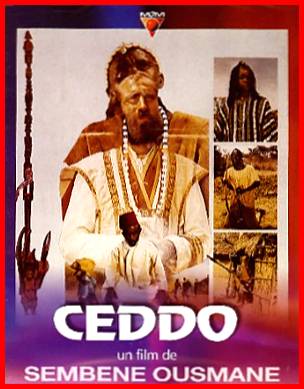
Ceddo (1977) by Ousmane Sembene


Just entered an African-movie mood.
Ceddo (1977) by the Senegalese director Ousmane Sembene tops the list.
The best and shortest description of the movie belongs to Mark Leeper: a very big film on a very small scale. Put differently: an Akira Kurasawa movie on the scale of a village. A micro-epic. 
The movie tells the story of an African tribe forced to covert to Islam. A small group of rebels - the Ceddo - refuses to follow the majority and decides to keep alive their traditions. 
It is not God that makes people human, says one of the rebels.
It is Him, argues the imam. And actually, if you don't recognize Allah you are dogs that should be killed.
But we have our own traditions and beliefs, continues the rebel.
It doesn't matter.
They should be killed, tells the imam to his followers. 
(a very personal and liberal narration of the movie). 
Don't forget the Catholics. They are watching on the margins, they are selling wine and guns to the natives. They are buying slaves and baptize them thereafter. 
In the end, some of them are killed. The king, because the law of Allah does not allow two different authorities (a religious and a secular one) to reign in the community. Catholics, because a village is too small to accommodate two Deities. The imam himself got killed. For the power of blood is stronger than the appeal of religious texts. 
Other people choose the exile. The movie has a sad end. 


Saturday, March 17, 2012

Atheism without Dawkins and Khrushchev

Alain de Botton, the acclaimed author of “The Consolations of Philosophy” has written another book, “Religion for Atheists: A Non-believer's Guide to the Uses of Religion”. This one could have easily been called The Consolations of Religion.

The similarity between these two books lies in the common approach used by the author. In the first book he has tried (and has succeeded!) to go across a good deal of philosophy and to extract from it ideas, concepts and role models that could be applied to the everyday life and its problems such as Unpopularity, Not having Enough Money, Frustration, Inadequacy, a broken Heart and Difficulties.

Now he proceeded in the same way with religion – he reads it not as a compendium of cosmological truths or exact depictions of alternative worlds (paradise/hell), but as a powerful source of solutions to the difficulties we encounter in our daily lives: loneliness, quest for community, moral support, role models and inspiration.

Taken this way, argues Botton, religion represents a useful strategy to be used along our secular ways – science, technology – in order to create harmony, mutual understanding and ethical guidance.

Botton’s approach is quite simple: he makes religion (previously philosophy) accessible for the average Joe.

But to be fair, he has also another reader in mind: the militant atheists who dismiss religion entirely, in the name of science, technology, psychiatry or common sense. Richard Dawkins, Christopher Hitchens and to a lesser extent Bill Maher or George Carlin would qualify for this category.

To be fair, Botton’s way of approaching religion is also biased: he sees in it only the bright sides while putting aside the dark ones. For example, the intense feeling of community that religion provides for its members is almost always accompanied by a feeling of exclusion and sometimes even hatred for the non-members or for the members of other religious groups.

One of the greatest points of the book is to demonstrate how inappropriate for social harmony and community our secular ways of living are.

Universities have long ago abandoned the idea of being not merely transmitters of knowledge and skills, but also educators of citizens and moral persons. More sermon-style lectures, suggests Botton.

Art has also renounced to preach or to teach what a good life is and has made a virtue from being non-engaged. Art should be used as a teacher. Religious art is an example of how to do it.

Public spaces are arranged in a way that helps separate human beings instead of putting them together. Airports or train stations, for example, with their huge crowds of anonymous persons going to or coming from somewhere represent an illustrative example of this tendency: “ they conspire to project a demeaning picture of our identities, which undermines our capacity to hold on to the idea that every person is necessarily the centre of a complex and precious individuality. It can be hard to stay hopeful about human nature after a walk down Oxford Street or a transfer at O’Hare.”

To these Botton opposes the solidarity and fraternity encountered in a church. Recently Botton has gone so far as to argue that we need to erect an atheist temple!

Food, another great unifier, has been transformed into a great divider: “The contemporary world is not, of course, lacking in places where we can dine well in company – cities typically pride themselves on the sheer number and quality of their restaurants – but what is significant is the almost universal lack of venues that help us to transform strangers into friends…The focus is on the food and the décor, never on opportunities for extending and deepening affections.” Ritual and religious food consumption is anything but anonymous, argues Botton. In religion food creates and maintains community.

There is, in the book, an implicit critique of militant atheism, the one that believes people are just blinded by religion and once the “veil of lies” is destroyed religious beliefs will just disappear. As if, the fact that religious cosmology does not fit into Einstein’s relativity theory or its cosmology cannot be integrated with the theory of the Big Bang, is somehow enough to erode faith.

Religion, as Alain de Botton convincingly shows, operates at many levels: on the individual psychological, on the societal, on the communal, on the spatial, on the cosmic, on the ethical and on the ontological levels.

The failure of the Soviet anti-religious propaganda could prove instructive to defend Botton’s point of view. Here are two examples.

In the novel “Sowers of seed” (russ. Сеятели) written by Mikhail Gh. Ciubotaru, a Communist activist is confronted with the fact that the entire village has gone to the cemetery in order to honor their dead. When he tries to help the people put the cemetery in order, the local party boss admonishes him by pointing out that to encourage cemetery-going contradicts the Communist policy of eradicating religion. The activist answers: I thought it is good to take care of the dead. I also believe you cannot just destroy the church and not to replace it with something at least as meaningful.

The second example comes from the Soviet anti-religious movie “Тучи над Борском” (Clouds over Borsk, 1960), where a young pioneer discovers that a colleague of her is a believer. Shocked and in tears, the girl points out to the deficiencies of the militant atheism of the Soviet state: We do not have a spiritual approach to our fellow citizens! (russ. "Нету у нас душевного подхода к человеку.")

As long as secular science is not able to offer role models, ethical systems, guidance in everyday life and a sense of community, the appeal of religion will be still alive, and its various functions still useful.

To sum: Alain de Botton’s book represents a wonderful atheist apology of religion.